The Center for African Studies recognizes this critical phase of graduate education. Summer research travel provides doctoral students with an invaluable opportunity to refine their dissertation proposals and establish the groundwork for successful fieldwork. By visiting research sites, building relationships with local collaborators, and assessing available resources firsthand, students develop more credible and competitive proposals for external funding.
How Giraffes Shape Savanna Ecosystems: A Field Study in Eswatini
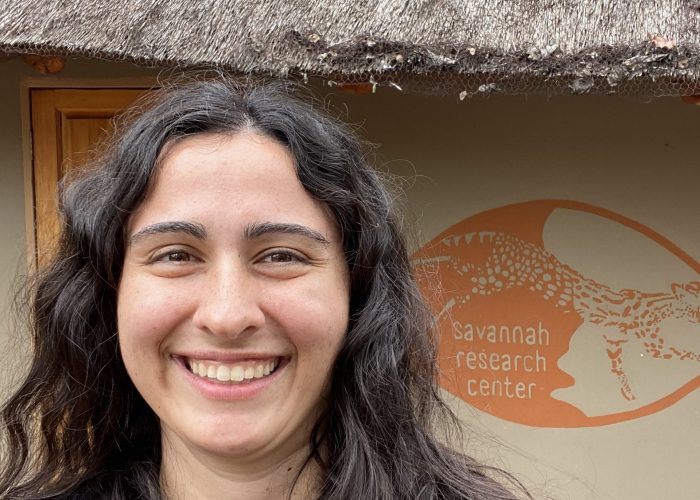
Monica Lasky, 2025 Award Recipient
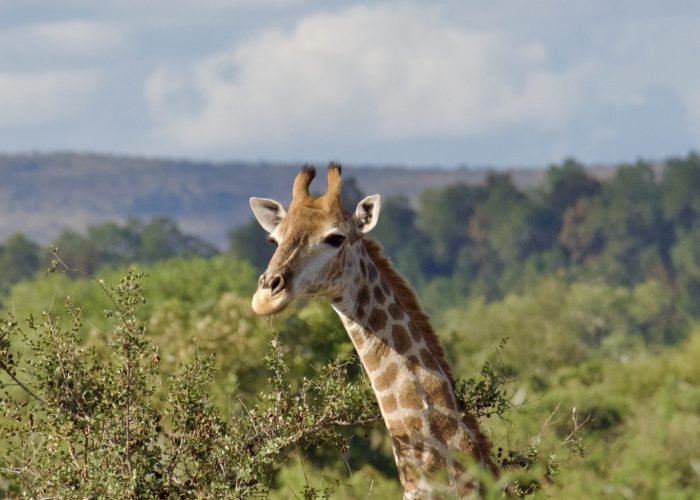
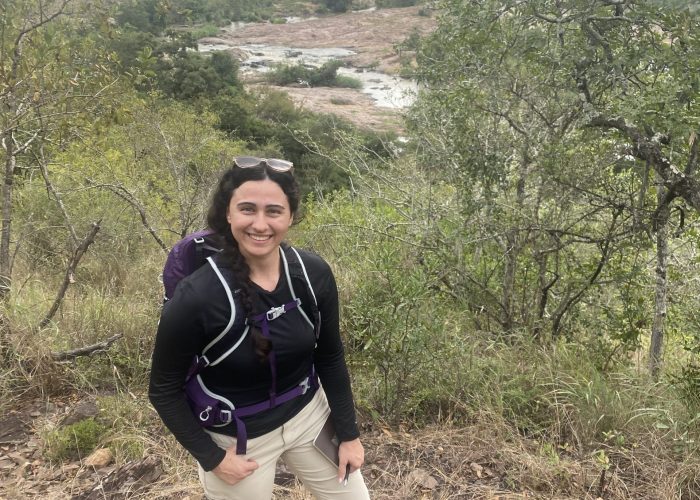
This summer, Monica Lasky traveled to Eswatini to begin fieldwork for her dissertation on how giraffes influence savanna tree populations. Her research focuses on whether giraffe browsing delays the growth stage at which trees reach reproductive maturity. Many savanna trees only flower once they are taller than 1.4–3.5 meters. Giraffes, as the tallest terrestrial herbivores, browse well above this threshold. By feeding high in the canopy, giraffes may prevent trees from flowering even when they are otherwise large enough to reproduce—a process that could have long-term consequences for savanna structure and persistence.
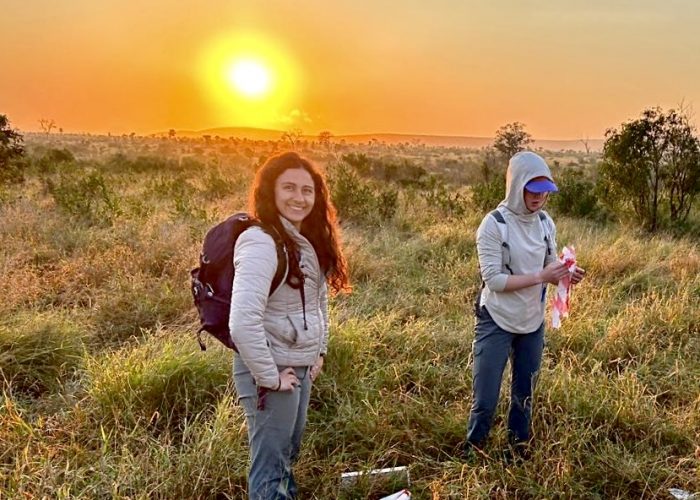
While in Eswatini, Lasky worked in two reserves: Mbuluzi Game Reserve, which supports a healthy giraffe population, and the adjacent Mlawula Nature Reserve, which has no giraffes. She measured how Senegalia nigrescens trees differed in size, shape, and flowering rates across three height classes—below, within, and above giraffe feeding height. This approach allows her to directly compare tree reproductive maturity in areas with and without giraffes.
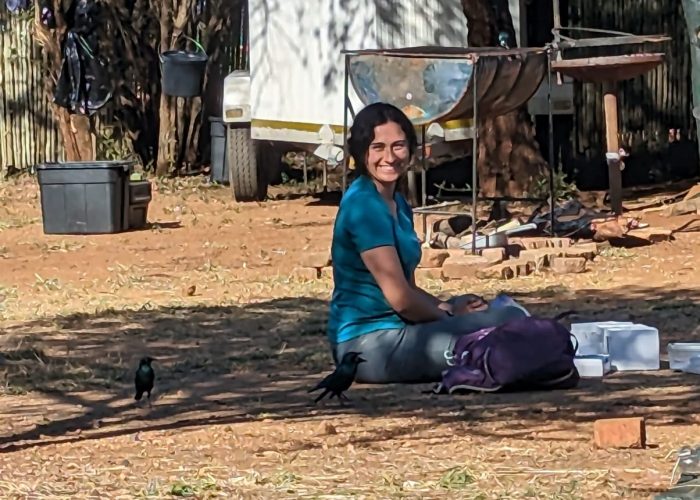
The grant made the project possible by supporting travel, equipment, and access to the reserves. Importantly, it also gave Lasky the chance to collaborate with local scientists and managers, building relationships that will strengthen future work. Fieldwork came with challenges including unpredictable weather, difficult terrain, and the logistical realities of conducting surveys in areas shared with dangerous wildlife. Flexibility and creative problem-solving were essential throughout the research season.
Lasky’s biggest takeaway is that conducting careful, comparative fieldwork is both demanding and rewarding. This season laid the groundwork for this chapter of her dissertation and gave her confidence in her methods. Going forward, this research will provide new insight into how giraffes shape tree populations and help inform conservation decisions for both giraffes and the ecosystems they influence.

Migration, Hope, and Policy: Understanding Senegalese Perspectives on Irregular Migration to Europe
Damian Oakes, 2025 Award Recipient
This summer, Damian traveled to Senegal and Spain to conduct preliminary fieldwork for his dissertation on the impacts of European Union cooperation with sending countries like Senegal in the management of irregular migration. His research explores local perceptions of and responses to Spain-Senegal migration policy by considering how hope of sending financial remittances and escaping societal death drive human migration to the global north. His work aims to fill a gap in external migration policies by focusing on global south perspectives at the micro level.
In Saint-Louis, Senegal, Damian renewed relations with contacts made during his first fieldwork in 2023 and visited new areas including Langue de Barbarie. He conducted semi-structured interviews and focus group discussions with community members, mainly youths from the target community. He learned basic expressions in Wolof and linguistic terms that have emerged because of irregular migration to Spain. Through visual ethnography, he documented different neighborhoods to highlight differences between homes that receive financial remittances and those that do not. This fieldwork allowed him to better understand perceptions of Europe, drivers of human migration, and societal challenges among youths who do not migrate.
In Sevilla and Cordoba, Spain, Damian presented a collaborative research paper from Universidad Loyola and UF at the Hope Congress. He met with organizations working with migrants living in Spain and academics researching human migration, while exploring the possibility of returning to Spain as part of his multi-site fieldwork.
The grant made this preliminary research possible. Fieldwork came with challenges—human migration had become a sensitive topic in Senegal, which Damian navigated by relying on community members he had met in 2023. Additionally, he learned basic Wolof and Spanish expressions during fieldwork and is now taking a Wolof course during the Fall semester while continuing Spanish through self-study.
Damian returned learning that conducting multi-sited ethnography is essential for understanding complex migration dynamics. This trip taught him the importance of learning languages, maintaining contact with people on the ground, and recognizing how field conditions can change drastically over time. Going forward, this research will provide new insight into migration from both sending and receiving countries and inform his dissertation proposal.


